• About
    • Meet Susan and Cindy
    • Our Values
    • Benefits of Massage
    • Privacy Policy Agreement
  • Courses
    • Dallas, TX – October 2026
    • Training FAQs
    • Online Courses
      • New! Palliative Positioning
      • A Beginner’s Guide for Massage Therapists
      • A Guide for Caregivers
  • Network
  • Blog
  • Media
  • Book
  • Contact

Soft Touch for Hard Times

Final Touch TrainingFinal Touch Training
  • About
    • Meet Susan and Cindy
    • Our Values
    • Benefits of Massage
    • Privacy Policy Agreement
  • Courses
    • Dallas, TX – October 2026
    • Training FAQs
    • Online Courses
      • New! Palliative Positioning
      • A Beginner’s Guide for Massage Therapists
      • A Guide for Caregivers
  • Network
  • Blog
  • Media
  • Book
  • Contact
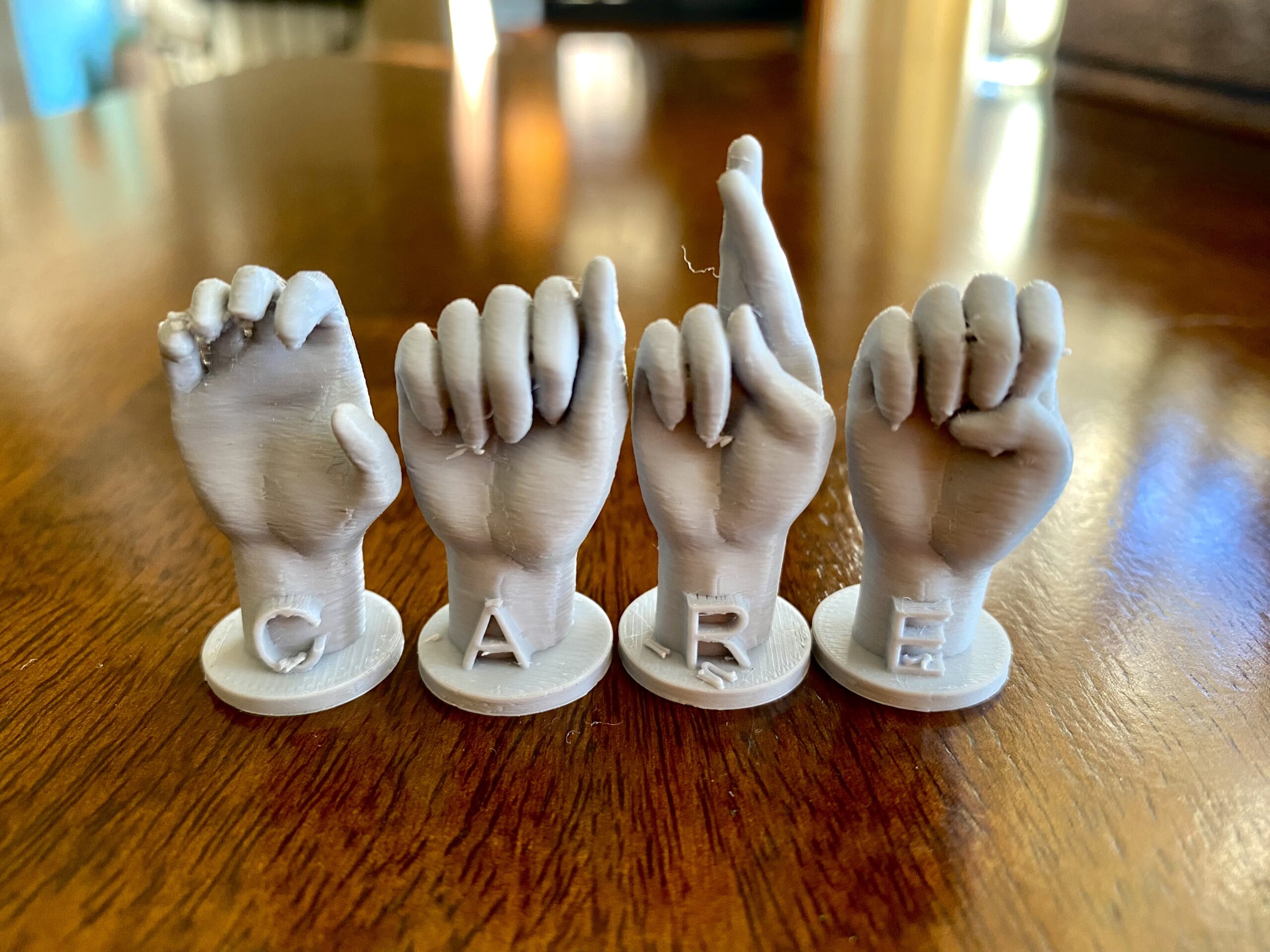
C-A-R-E, Spelling it Out in Your Care Plan

C-A-R-E, Spelling it Out in Your Care Plan

February 2, 2024 Posted by cindyandsusan

Touch therapists working in clinical environments (hospice, palliative care, or hospitals) may be required to provide care plans for the patients we see. Care plans let other team members know what issues are being addressed by massage therapy. They also help the agency meet compliance with government regulation. In many clinical settings, care plans are standard.

Care plans typically include a problem that is being addressed, a plan, and an outcome that the therapist hopes to achieve. The outcome should be specific and measurable, something like “client will report reduced pain” rather than “client will feel better.” Since many clients are nonverbal at the end of life, it can be helpful to have templates for measurable outcomes that don’t rely on client input.

Below are some sample care plans that are used at Faith Hospice, which can be adapted for use in other environments.

Problem: Pain

Plan – Light massage to upper and/or lower body as tolerated and appropriate.

Goal – Patient will report or exhibit signs of reduced pain with massage therapy, including slowed respiration, reduced need for PRN medication, and/or improved sleep.


Problem: Anxiety (can also be used for the problem of agitation)

Plan – Light massage to upper and/or lower body as tolerated and appropriate.

Goal – Patient will report or exhibit signs of reduced anxiety (or agitation) with massage therapy, including slowed respiration, absence of restless movement, and deeper sleep.


Problem: Dry Skin

Plan – Light massage with emollient cream to accessible areas of skin on upper and/or lower body as tolerated and appropriate.

Goal – Patient will exhibit signs of improved lubrication of the skin with massage therapy, including reduced peeling and itching.


Sometimes there isn’t really a presenting problem. The dying person’s symptoms are well controlled. They simply wish to enjoy massage! For that category, we sometimes use “general discomfort” which can be anything from feeling sore or stiff from inactivity to a vague sense of desire to be touched. Here is how we handle this category at Faith.

Problem: General Discomfort

Plan – Light massage to upper and/or lower body as tolerated and appropriate.

Goal – Patient will report or exhibit signs of enhanced comfort and relaxation with massage therapy, including slower respiration, deeper sleep, and/or reduced requests for repositioning.


It can be tempting to view care plans as “busy work.” But they are actually an opportunity to be mindful of the impact of massage on our clients and to educate others on the care team. We wish you luck and hope you’ll share the words you come up with to describe and measure the impact of your important work!


Share
0

About cindyandsusan

Cindy and Susan are massage therapists specializing in end-of-life massage. They co-created Final Touch Training and love offering this specialized training to others. More info available at FinalTouchTraining.com

Recent Posts

  • When It’s More Than Just Massage
  • On the Road Again: Why We Love Home Visits
  • ONE SIMPLE THING to improve your bedside care
  • When You’re Not Informed of Your Patient’s Death
  • Another Touching Story: Reframing the Sounds of Dying

Find Us on Social Media

Recent Comments

  • cindyandsusan on A Trio of Touching Stories
  • Rick Furman on A Trio of Touching Stories
  • Jill on Being Present at the Moment of Death
  • cindyandsusan on The Two Worlds We Straddle – The Massage World and the Hospice World
  • Mary Peifer on The Two Worlds We Straddle – The Massage World and the Hospice World

Archives

  • July 2026
  • October 2025
  • September 2025
  • August 2025
  • March 2025
  • November 2024
  • October 2024
  • September 2024
  • April 2024
  • February 2024
  • October 2023
  • July 2023
  • March 2023
  • January 2023
  • November 2022
  • July 2022
  • June 2021
  • June 2020
  • May 2020
  • March 2020
  • February 2020
  • December 2019
  • November 2019
  • October 2019
  • June 2019
  • May 2019
  • February 2019
  • January 2019
  • September 2018
  • July 2018
  • June 2018
  • April 2018
  • January 2018

Categories

  • Caregivers
  • Continuing Education
  • Hospice
  • Hospice Massage
  • Hospice Massage Training
  • Relaxation

Meta

  • Log in
  • Entries feed
  • Comments feed
  • WordPress.org
Questions? We're here to help. Contact Us

Final Touch Training

  • Dallas, TX 75208
  • connect@finaltouchtraining.com
  • https://www.finaltouchtraining.com

Find Us on Social Media

Facebook

Instagram

Copyright © 2026 · Final Touch Training · All rights reserved.

  • Find us on Facebook
Prev Next
Tuition Options

$520 for massage therapists (will receive 20 CE hours)
$520 for other professionals not eligible for or are not seeking continuing education hours
$540 for nurses and other eligible professionals (listed below) who are seeking 20 CE hours*

All Final Touch Training courses are approved for continuing education hours for massage therapists by the National Certification Board for Therapeutic Massage (NCBTMB Approved Provider #1146). This course provides 20 CE Hours (Wednesday, Thursday, Friday). Students must be present for all sessions; no partial credits will be given.

In addition, our courses are approved for continuing education credit provided by the Continuing Education Institute of Illinois in collaboration with the University of Illinois Department of Family Medicine for the following professions: acupuncturists, athletic trainers, counselors (clinical/professional), dietitians/nutritionists, marriage and family therapists, nurse practitioners, nurses (RNs/LPNs), nursing home administrators, occupational therapists and COTAs, physical therapists and PTAs, psychologists, respiratory care therapists, social workers. *An additional fee of $20 is applied to tuition for participants in these professions who wish to receive 20 CE hours upon completion of this course.